

Martin Duffy
Download PDF
Jun 18 2025
0
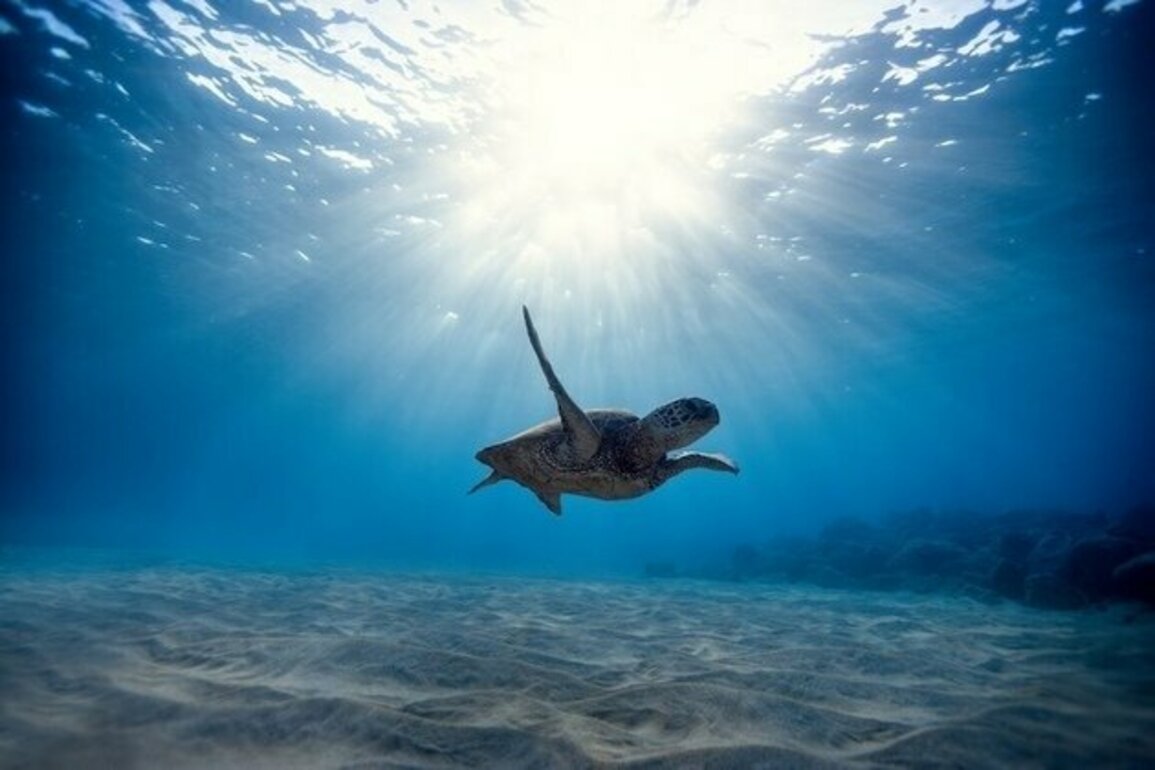
viewsusamedeniz/DepositphotosFew international observers expected much from the3rd United Nations Ocean Conference(UNOC3) which closed in Nice on 13 June 2025. This was probably just as well as so many other ocean and climate initiatives have come and gone in past decades. In the eyes of ocean experts and the NGO community, the collective achievements have been paltry.Irelandis among the countries most vocal in their scepticism. This is in contrast to the results claimed by member states and perhaps even by the UN itself from the slivers of achievement squeezed from hours of tense negotiation.
Perhaps the greatest, unequivocal accomplishment of this solid week of hot-house talks, is that there will follow both more talks and (graduated) but effective action with statistical indices for monitoring results. Recalling the quip that 90% of success is merely turning up, Secretary-General Guterres and his team got the conference across the finish line. Most professional analysts might say that, based on past performance, this is likely as good as it gets. Admittedly that is modest comfort to islands questioning whether they will even be around in a half-century.
I spoke with theUNs NGO liaison deskwhich has the difficult task of managing the participation of hundreds of oceanographic NGOs at the conference, and (more problematically) their frustrations and inevitable dissatisfaction. These summits are powder-kegs of potential explosion between the UN, member-states and NGOs. It is sometimes a surprise to me that there isnt actually more whale blood on the carpet. The UN summary was predictably positive:
However, oceanographic NGOs are quick to explain that realities invariably lie in the detail. The general public, for their part, are perfectly at liberty to probe the tangible outcomes of the UN Ocean Conference. As is usual in the wake of all these major summits, whatever their field, no-one can hope to see results for quite some time. However, if there is a gleam of light from Nice it is surely that the resulting political declaration (unusually) says quite a bit about diplomatic and legal enforceability.
The key accomplishment is that enough countries either ratified or formally committed to ratifying the high seas treaty. Once ratified, this agreement will help achieve an agreed global target of protecting 30% of the worlds seas by 2030. It will provide the first legal mechanism for the creation of protected areas in the high seas, international waters that cover almost two-thirds of the ocean. This pathway has some mechanisms of enforcement. If these are exercised and the responsible bodies are less than paper tigers, then enforcement may follow.
Speaking at the closing press conference,Li Jinhua, UN Under-Secretary-General for Economic and Social Affairs and UNOC3 Secretary-General, said the pledges made at Nice must be rigorously implemented, tracked, and scaled. I attended the USGs informal briefing where it was put to him that his pledges were highly aspirational and predictably Mr Jinhua was quick to put the best possible spin on the token promises that a week in Nice had delivered . When I spoke to theUNOC3 Press Officetheir spokesperson was a little more forthcoming on the details of how such a political declaration could be achieved:
There were also substantial examples of national, bi-lateral and multi-national action. Principal among these, the High Ambition Coalition for a Quiet Ocean, of 37 countries, co-led by Canada and Panama and which includes Ireland, was also launched at UNOC3 to campaign for a reduction in underwater noise pollution. Germany has launched a 100m action plan to clear World War II-era munitions in the Baltic Sea and North Sea, while, Indonesia and the World Bank launched a Coral Bond, a new financial instrument to raise private capital to conserve coral reef ecosystems in Indonesias marine protected zones.
The implicit objective of UNOC3 was to encourage countries to ratify the High Seas Treaty. This aims to curb overfishing and safeguard marine ecosystems. An impressive total of nineteen countries ratified the treaty during UNOC3, bringing the total number of ratifications to 50. When I asked the UNOC3 desk they admitted there was more to be done. But here we are into the enforcement and implementing stressors which the UN has put at the conclusion of Nice. The goal of support is still way far off what is necessary for implementation. In fact, at least sixty ratifications are required in order for the treaty to come into force at UN level.
There were colourful moments too such as theNGO Ocean Rebelliondressed in costumes mocking a blind-folded French President Emmanuel Macron lampooned as strolling along the Promenade des Anglaise. Host countries for international summits are invariably the most defensive about goals. Thus, Olivier Poivre DArvor, French special envoy at UNOC3, said, what was decided in Nice cannot be undone. No illegal path is acceptable. It was clear that the NGO community felt that Macron was blind to the obstacles of the Nice Summit. I spoke to the press desk for Ocean Rebellion and received, as expected, a much more scathing appraisal:
Some 95 countries also supported a French initiative to limit plastic production and consumption, ahead of the next round of talks in Geneva in August which hopes to achieve a global plastics treaty. But probably the biggest failing was that USA sent no high-ranking delegation. This was hardly surprising given Donald Trumps fast-tracking of deep-sea mining licences in US and international waters, dredging the seafloor with a pump to extract metals and minerals. The USA delegation in Nice were understandably less than vocal and pretty invisible. Perhaps it is actually another minor achievement that an all-out diplomatic spat between America and the USA was averted at Nice.
UNSGAntonio Guterres, specifically referenced deep sea mining, the deep sea cannot become the Wild West. The USA experts pretty much took that direct criticism of President Trump without protest. More generally, the Nice Summit underlies the formidable extent to which the current US administration is at odds with almost the entirety of global government on protecting the worlds oceans.
As Karen McVeigh said inThe Guardianthere was momentum and enthusiasm (and) critical voices too. CarryingJacques Cousteauslegacy The sea mans only hopeDavid Attenboroughwith his acclaimed new film, Ocean, demonstrated its fate along with the deterioration of 70% of the Earths surface. UNSG Guterres called the pace of progress a record. Nice was not a victory but the UNs progress must surely be measured against the other depressing crises in the world. There was a touching symbolism inLudovic Burns Tukiblowing a pu, a traditional conch shell with the support of our ancestors. In Polynesian navigation, the conch is sounded to signal peaceful intent.
Co-sponsor,Arnoldo Andr-Tinoco, Foreign Minister of Costa Rica, urged other nations to accelerate financing for ocean protection. Each commitment must be held accountable, he said at the conferences closing meeting. But the concluding note must surely be that all that potential momentum carries a crucial acid-test of follow-up. ForPeter Thomson, the UNs Special Envoy for the Ocean, Nice marked a turning point. Its not so much what happens at the conference, it is what happens afterwards, recalling the early days of ocean advocacy when the UNs Sustainable Development Goal 14 (SDG14), on life below water, was first agreed. Nice was a step forward but hardly a victory for ocean diplomacy.
Further Reading on E-International Relations
- Behind the Scenes: Unveiling Paradiplomacy in the Climate Conference of the Parties
- The UN COP26 and 30 by 30: Turning Points or More Business-As-Usual?
- The Global South and UN Peace Operations
- Developing Countries and UN Peacebuilding: Opportunities and Challenges
- Opinion A Diplomatic Breakthrough on Seas
- Equal Voices, Shared Futures: Reforming the UN at a Critical Crossroads
About The Author(s)
Martin Duffy has participated in more than two hundred international election and human rights assignments since beginning his career in Africa and Asia in the 1980s. He has served with a wide range of international organizations and has frequently been decorated for field service, among them UN (United Nations) Peacekeeping Citations and the Badge of Honour of the International Red Cross Movement. He has also held several academic positions in Ireland, UK, USA and elsewhere. He is a proponent of experiential learning. He holds awards from Dublin, Oxford, Harvard, and several other institutions including the Diploma in International Relations at the University of Cambridge.
TagsClimate ChangeOceansUnited Nations